
Introduction
A business sign should do more than display a company name. It should help customers recognise the brand, communicate professionalism and make the premises easier to identify. Built Up Letters are a popular signage solution for businesses that want a dimensional finish rather than a traditional flat display. Made from materials such as acrylic and aluminium, these raised letters can be customised to match a company’s logo, colours and visual identity. Businesses considering this style can explore custom built-up 3D signs to understand the options available for different commercial settings.
From shopfronts and office receptions to hotels and corporate buildings, 3D lettering offers flexibility in design, material and finish.
Built Up Letters: A Modern Solution for Business Signage
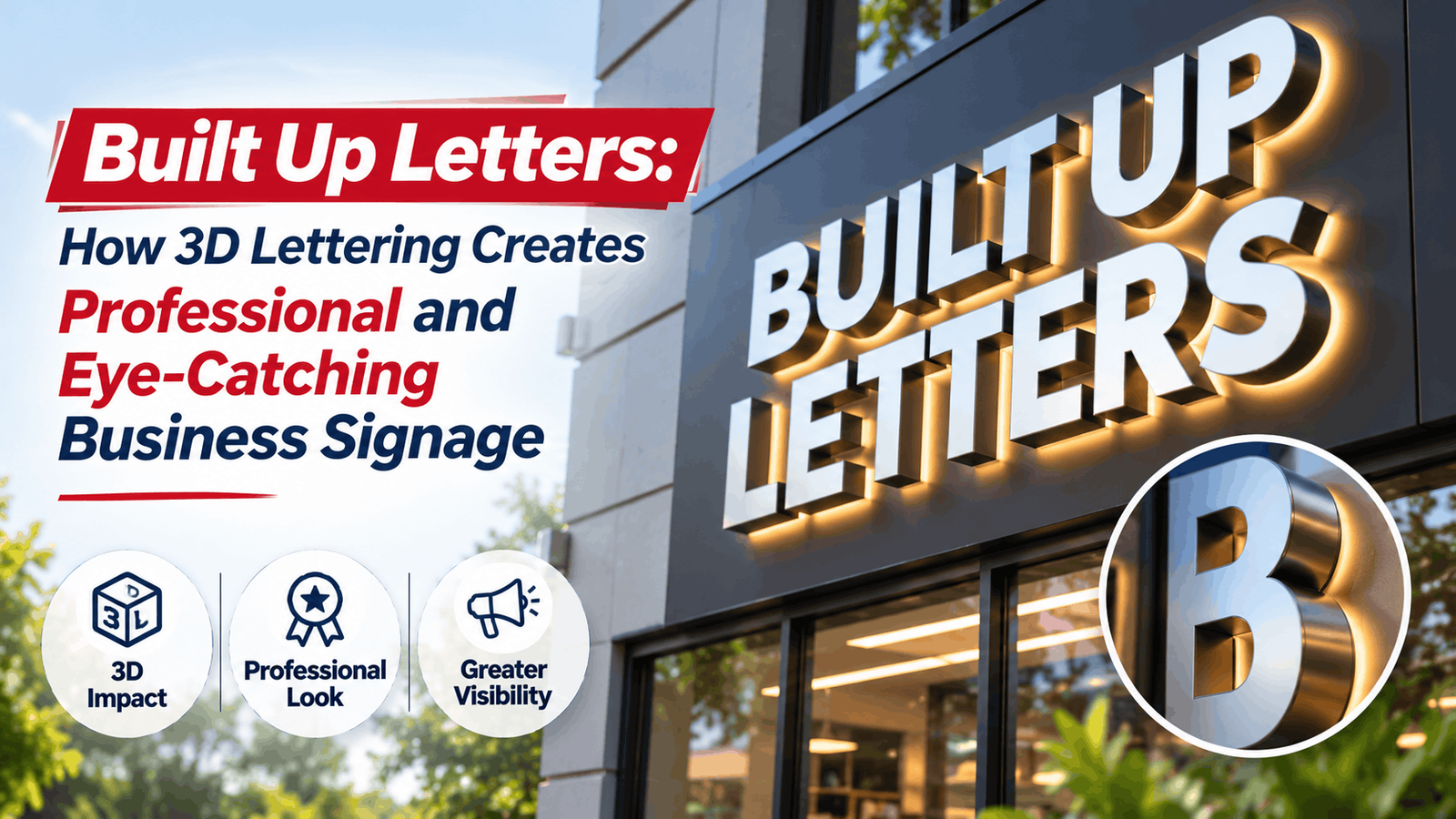
Built-up lettering gives signs a three-dimensional appearance by using individual raised characters rather than printing words onto a flat surface. Each letter is manufactured separately and fixed to a suitable backing panel or directly onto a wall or building façade.
This creates depth and makes the lettering stand out from its surroundings. Depending on the design, the letters can have a polished, understated or more prominent appearance.
Businesses often choose this style because it can be tailored to different environments. A reception sign may use elegant acrylic lettering, while a large external display may require robust aluminium construction.
What Are Built Up Letters?
Built Up Letters are individually fabricated characters made from materials that provide depth and structure. They are sometimes called 3D sign letters or dimensional lettering.
Unlike flat vinyl lettering, built-up characters have sides as well as a front face. Their depth, thickness and finish can be adjusted according to the intended design.
A typical sign may include:
- Custom-shaped letters or logo elements
- A selected material, such as acrylic or aluminium
- A front face and fabricated sides
- A choice of colour, texture or finish
- Fixings or a mounting system suited to the installation surface
- Optional LED components for illuminated designs
The final construction depends on the size of the sign, its location and whether it will be viewed indoors or outdoors.
Different Types of Built-Up Lettering
The material has a significant influence on the appearance, weight and suitability of a sign. Three common options are acrylic, aluminium and illuminated lettering.
3D Acrylic Letters and Built Up Acrylic Letters
Acrylic is a versatile material that can produce clean, smooth lettering in a wide range of colours and finishes. 3D Acrylic Letters are often used for reception areas, retail interiors and branded displays where appearance is particularly important.
Built Up Acrylic Letters can be customised to suit a company logo or chosen typography. They are suitable for many indoor applications and can also be specified for appropriate external uses, depending on the material and installation requirements.
Aluminium Built Up Letters and Built Up Metal Letters
Aluminium is frequently selected for external and commercial signage because it offers a strong yet relatively lightweight construction. It can be finished in different colours and styles to complement a building’s architecture.
Aluminium Built Up Letters are useful for shopfronts, office façades and larger business signs. Other metal options may be considered where a particular finish or design effect is required.
The choice should account for exposure to weather, fixing requirements and the desired appearance.
Built Up Illuminated Letters
For businesses that need their signs to remain visible after dark, Built Up Illuminated Letters combine dimensional lettering with lighting components, commonly LEDs.
Different lighting effects are possible, including:
- Front-lit: Light shines through the face of each letter.
- Backlit: Light creates a halo effect behind the lettering.
- Combination-lit: More than one lighting effect is used.
Illuminated lettering can be particularly effective for hospitality venues, retail premises and businesses that operate during evening hours. Electrical components and installation should be specified and fitted appropriately for the location.
Benefits of Using 3D Letters for Business Signs
Choosing 3D Sign Letters can offer several advantages over conventional flat signage.
A more prominent appearance: Raised characters create depth and help a company name or logo stand out from the background.
Customisation: Businesses can select different fonts, sizes, materials and finishes to reflect their branding.
Professional presentation: Dimensional lettering can give reception areas, shopfronts and commercial buildings a polished appearance.
Flexible applications: Signage Letters can be produced for interior walls, external façades, reception desks and other suitable surfaces.
Lighting options: Illuminated designs can improve visibility in lower-light conditions when properly specified.
The most suitable option depends on the business’s objectives, location and budget rather than appearance alone.
Where Can Built-Up Letters Be Used?
Built-up lettering can be adapted to many commercial environments.
- Shopfronts: Display a business name above the entrance or on the façade.
- Office receptions: Create a branded focal point behind the reception desk.
- Hotels and restaurants: Make the venue easier to identify and reinforce its identity.
- Corporate buildings: Present company names and logos on external walls.
- Retail interiors: Support product displays and internal brand presentation.
- Showrooms: Use dimensional lettering to create a consistent customer-facing environment.
For every application, the letter size and placement should suit the viewing distance and surrounding architecture.
How to Choose the Right Material and Finish
Before ordering custom lettering, consider how the sign will be used and what conditions it will face.
- Location: Decide whether the letters will be installed indoors or outdoors.
- Material: Choose acrylic, aluminium or another suitable material based on appearance and practical requirements.
- Letter size: Consider viewing distance, available space and readability.
- Finish: Select colours and surfaces that complement the brand.
- Lighting: Decide whether standard or illuminated lettering is more appropriate.
- Installation: Check the wall or mounting surface and confirm the correct fixing method.
A design proof or visual mock-up can help businesses review proportions, colours and spacing before production begins.
Built Up Letters vs Flat Sign Letters
Flat sign letters are generally applied directly to a surface or printed as part of a sign panel. They can be a practical choice for simple displays and projects where budget or space is limited.
Built-up lettering has physical depth, creating shadows and a more dimensional appearance. It may be preferable when a business wants its name or logo to become a prominent feature.
Neither option is automatically better. The right choice depends on the brand, installation location, viewing distance and available budget.
What to Consider Before Ordering Custom Lettering
A successful sign starts with accurate planning. Before confirming an order, make sure you have considered:
- Correct spelling and approved logo artwork
- Final letter dimensions and overall layout
- Material thickness and finish
- Indoor or outdoor suitability
- Mounting surface and installation access
- Electrical requirements for illuminated signs
- Cleaning and maintenance arrangements
- Any relevant permissions for external advertising
In the UK, certain external signs may require advertisement consent depending on their location and characteristics. Businesses can review the GOV.UK guidance on advertisements and check requirements with the relevant local planning authority.
For illuminated designs, electrical work should be planned and carried out safely. The Health and Safety Executive’s electrical safety guidance provides information about managing electrical risks.
Summary
Built Up Letters offer businesses a flexible way to create professional, dimensional signage. Acrylic, aluminium and illuminated options each provide different visual and practical benefits, making it possible to tailor a sign to a shopfront, reception area or commercial building.
The best results come from choosing suitable materials, planning the layout carefully and using an appropriate installation method. Businesses looking to develop a consistent visual identity can also explore Business signs in Manchester as part of their wider signage requirements.
FAQs
1. What is the difference between built-up letters and flat lettering?
Built-up letters have a three-dimensional structure with raised sides, while flat lettering is applied or printed onto a surface without the same depth. Built-up lettering creates a more prominent dimensional effect.
2. Are built-up letters suitable for outdoor signs?
Yes. Materials such as appropriately specified aluminium can be used for external applications. Suitability depends on the material, finish, fixings, weather exposure and installation method.
3. Can built-up letters be illuminated?
Yes. LED lighting can be incorporated into suitable designs to create front-lit, backlit or combined lighting effects. The construction needs to accommodate the lighting components and electrical connections.
4. Which is better for business signage: acrylic or aluminium letters?
Neither is best for every project. Acrylic offers a smooth, versatile finish, while aluminium provides a robust option often used for external commercial signs. The choice depends on the desired appearance and installation conditions.